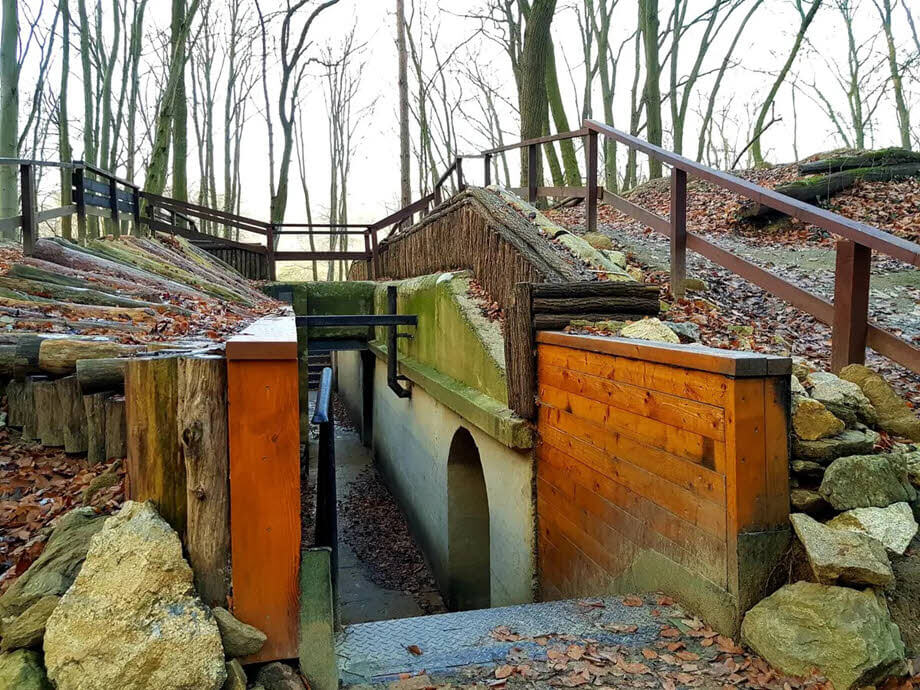
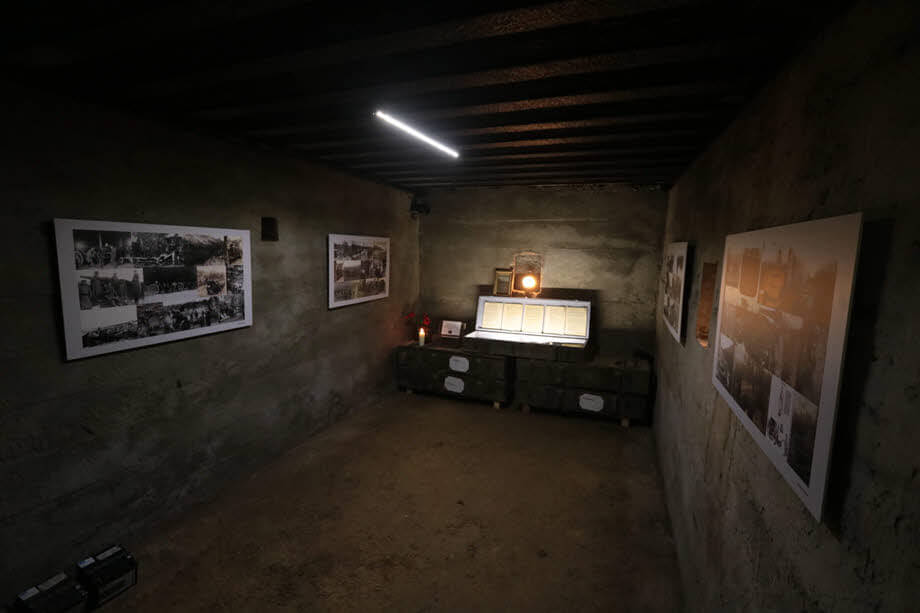
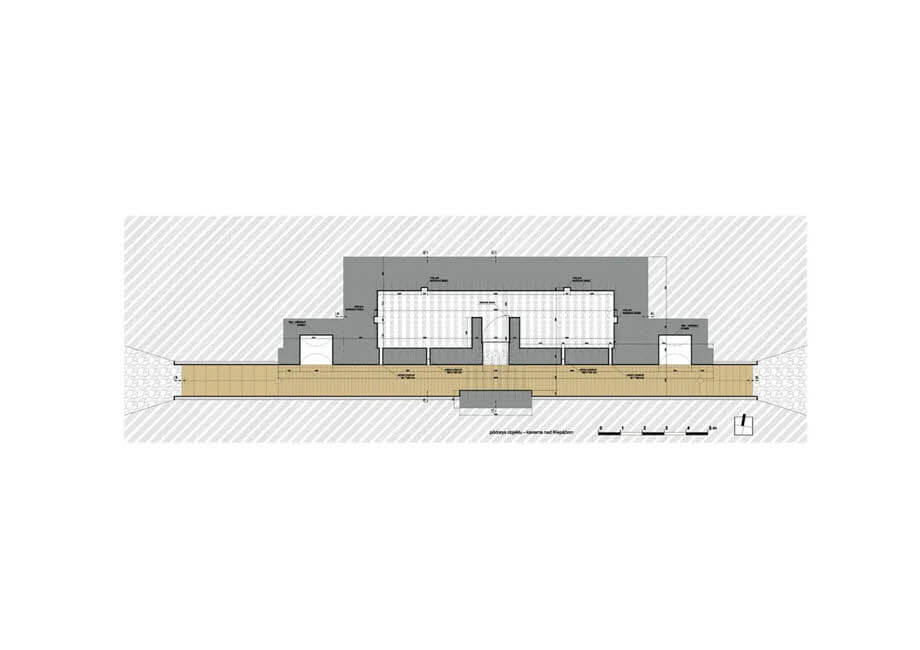
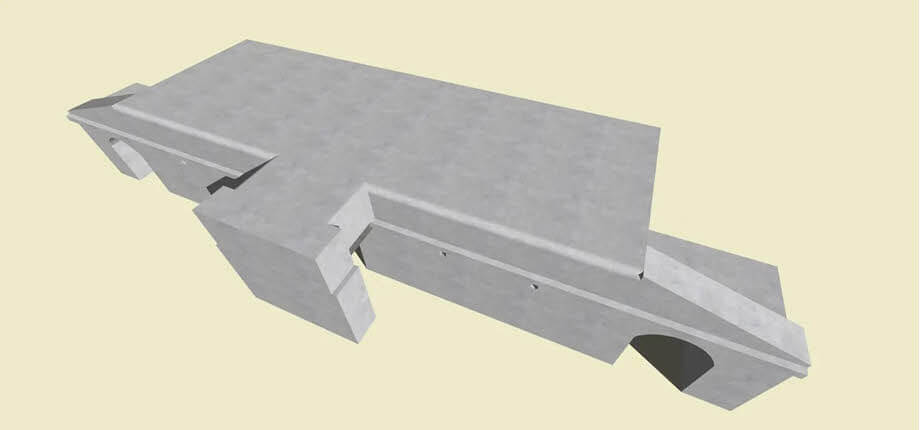
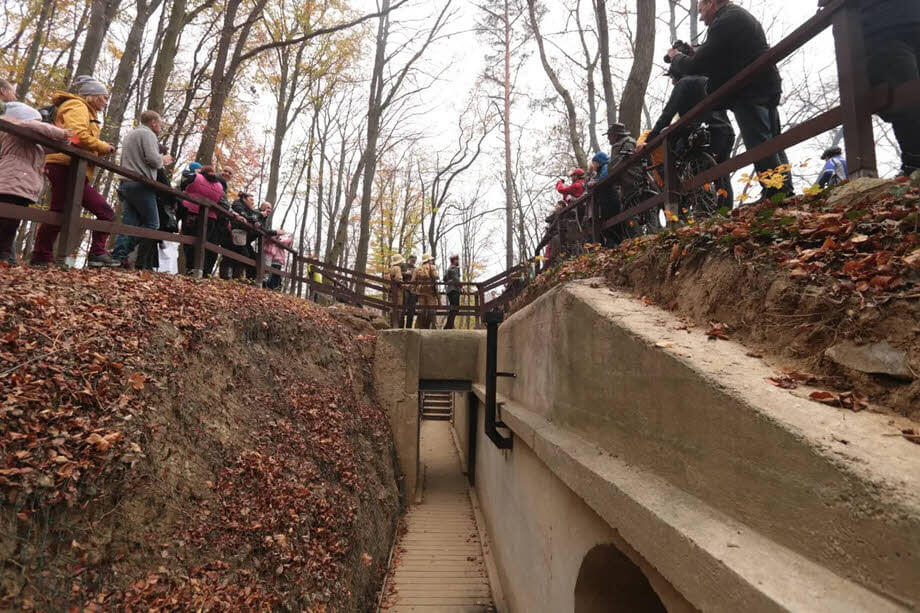
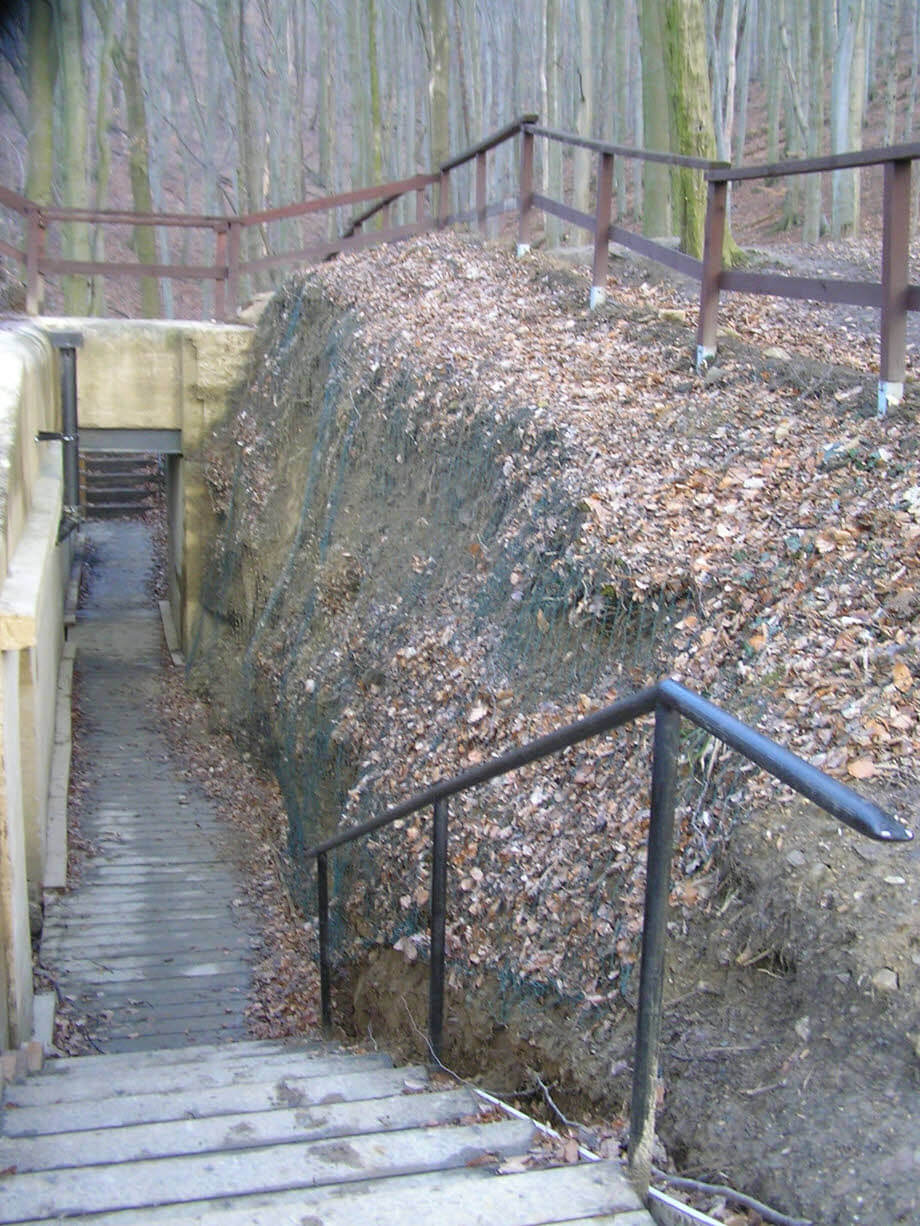
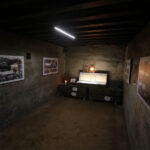
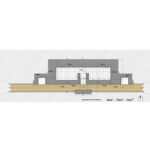
This is a First World War bunker which, like the Kavernen, served as a shelter for artillerymen and ammunition. Unlike the Kavernen, it was not cut into the rocky subsoil, but was built entirely in masonry or concrete and only then covered with earth. The bunker’s surroundings have been restored and it is occasionally opened to the public. Unterstände were built where the subsoil and terrain made it impossible to drive Kavernen into the rock. This was either in places with unsuitable geology, on flat terrain, or where the ceiling could not be covered with a sufficient depth of earth. They therefore differ from Kavernen in that they were constructed entirely in an excavation, with walls either built of brick or cast in concrete. The ceilings were always made of steel sections and boards, above which a thick concrete roof was constructed. Unlike Kavernen, Unterstände have a regular rectangular ground plan, with the entrance located in the centre of the bunker’s longer wall. The entrance is always protected by a roofed concrete wall, with exits to both sides along the wall so that it would not be blocked during bombardment. The bunker is located in the Železná studnička area, on the hill above Klepáč Mill, from which it takes its established name, “Klepáč Bunker”. It is one of seven surviving Unterstände in Bratislava. Like most of the other accessible First World War bunkers, it was cleaned and restored by the civic association Bunkre. The structure is opened on selected dates and anniversaries, or by arrangement.

Military bunkers

Klepáč Unterstand
-
-
-
-

-