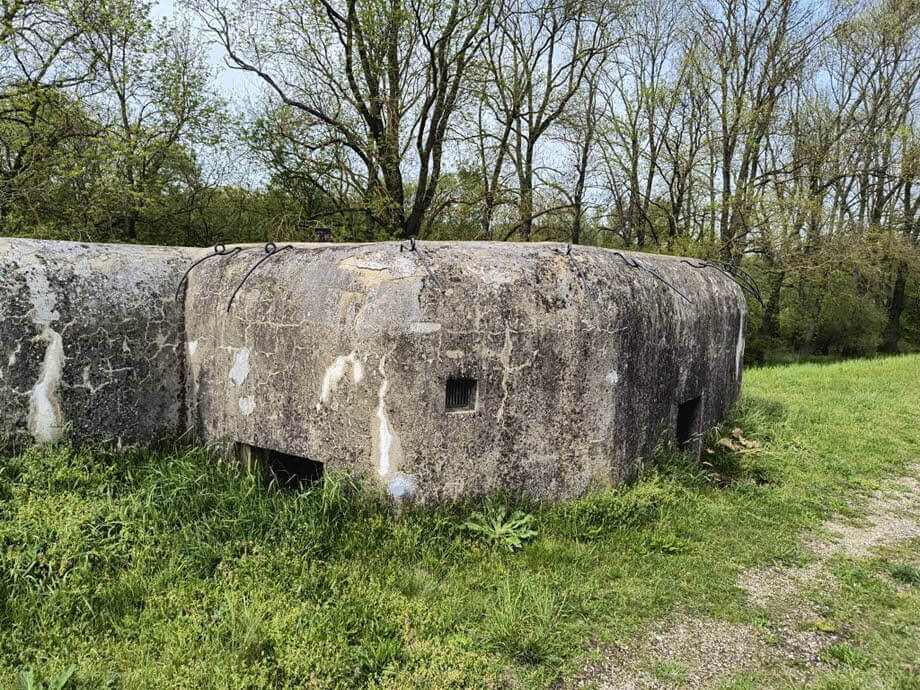

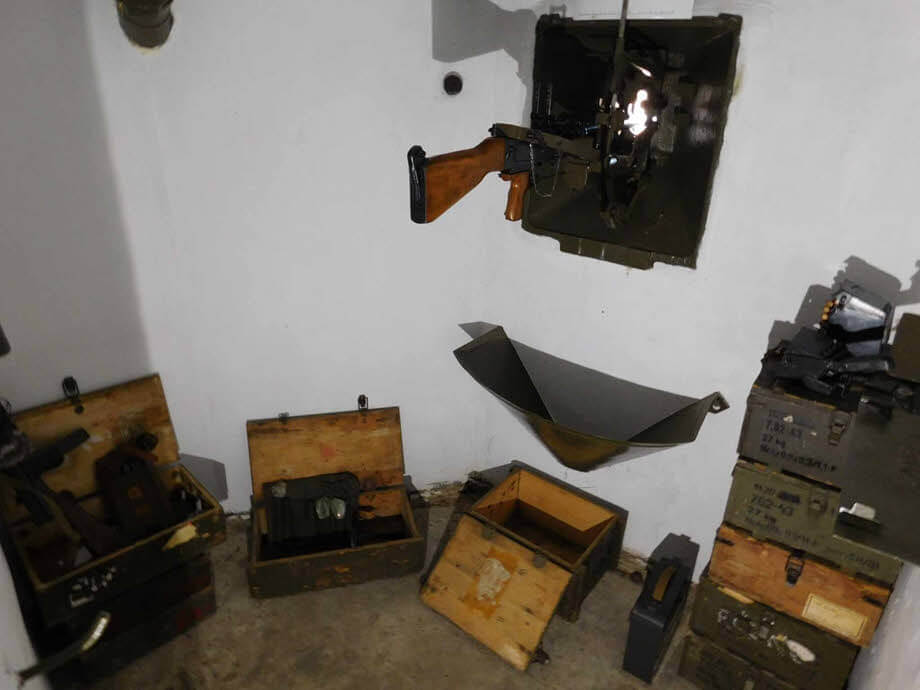
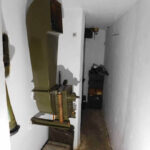
The Gajary Light Fortification Military Museum consists of two Model 37 light fortifications. The two bunkers are not only of different designs (Type A and Type D), but each has also been restored to represent a different period. The Type D structure presents the period of the First Czechoslovak Republic, while the Type A structure represents the Cold War period. The museum contains some of the best-restored light fortification structures in western Slovakia.
On Slovakia’s western and southern borders, mainly Model 37 light fortifications were built between January 1937 and September 1938, popularly known as “ropíky”. The name comes from the abbreviation ŘOP (Ředitelství opevňovacích prací – Directorate of Fortification Works), the body responsible for their construction. These were small, standardised bunkers, and in less than two years almost 10,000 were built along Czechoslovakia’s borders. The first of the two, designated LI/10/D2Z, is a rare Type D structure, as it is one-sided and resembles only the left half of the more widespread Type A. It had a crew of four men, and its role was to protect the bridge that once spanned the Morava River here. The bunker is being restored to its 1938 condition, and guided tours allow visitors to see period weapons and equipment inside. The second structure, designated LI/11/A-200Z, is an example of the most widespread Type A, with embrasures on both sides of the bunker. It is located within the body of a flood-control dyke and is being restored to show the period of post-war reactivation, when these bunkers were rearmed by the Czechoslovak People’s Army and prepared for a possible attack by NATO. The fortifications on Slovakia’s southern border were systematically destroyed during the war and, of the 691 structures originally built in concrete, only 53 bunkers have survived to the present day. The light fortifications in Záhorie, stretching from Moravský Svätý Ján to Bratislava, remain almost complete, with 155 structures still standing. The most widespread type of Model 37 light fortification is Type A. It had two small firing rooms on either side of the bunker, connected by a narrow corridor with a hand-operated fan. Its armament usually comprised heavy machine guns, sometimes light machine guns, and the crew of such a bunker consisted of seven soldiers. With all the weapons, ammunition, and tools inside, they had relatively little space. Nevertheless, it was precisely these light fortifications, protecting one another with flanking fire, that were to be built around the borders of the entire Czechoslovak Republic, as they were quick to construct and helped to keep costs down. Because of the Munich Agreement, however, these plans were never completed. The museum is easily accessible from the village of Gajary by bicycle or by car in the direction of Prístavisko Gajary. Both bunkers are being restored by members of TJ Sokol Gajary, who lease them from the municipality. They are open on selected dates, on open days, during the annual military-history event Hranica, at the opening of the boating season on the Morava River, or by arrangement.

Military bunkers

Gajary Light Fortification Military Museum

-

-
-
-