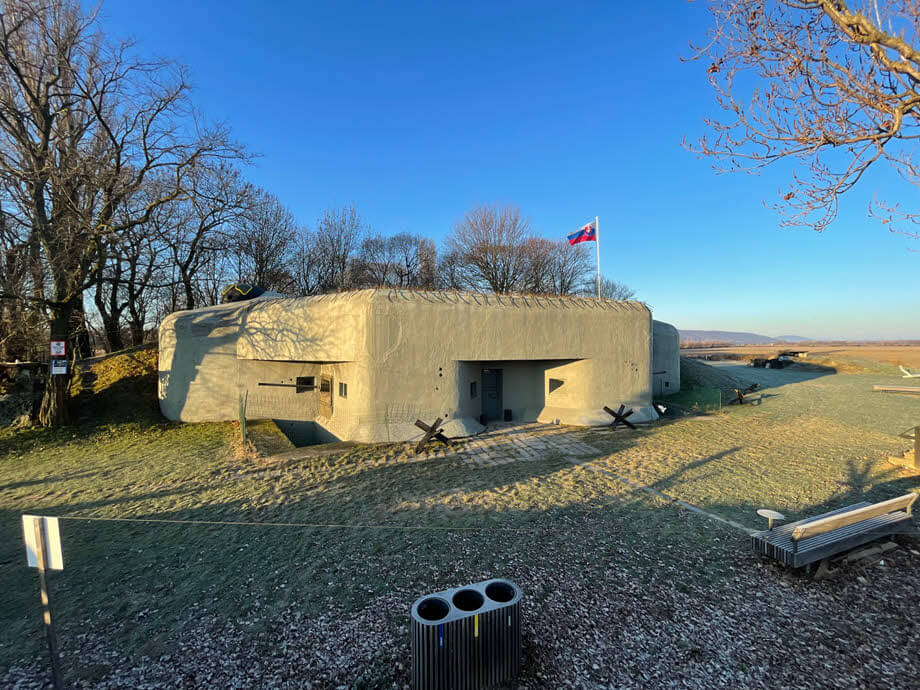
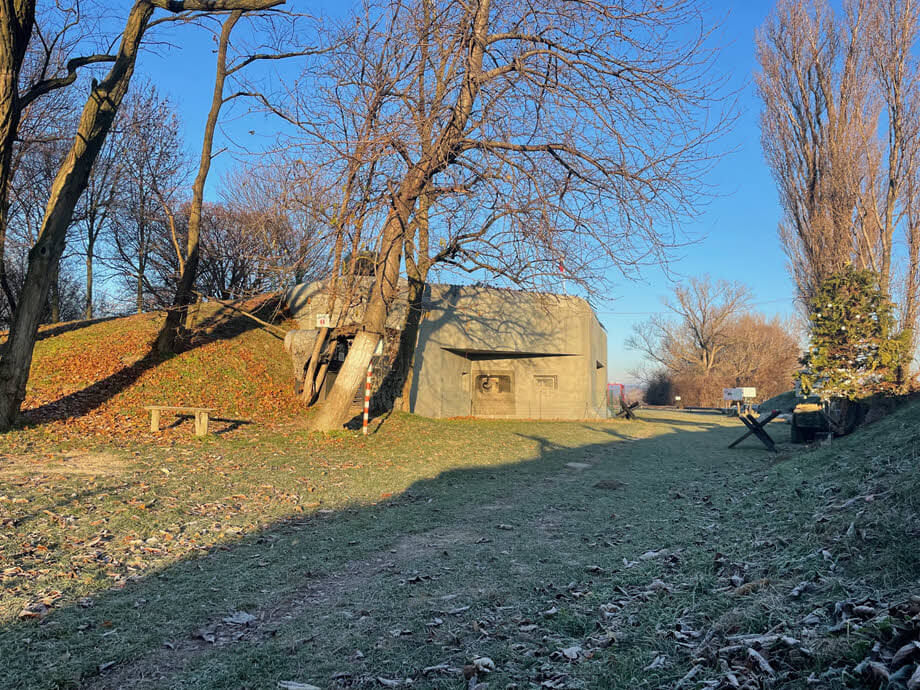
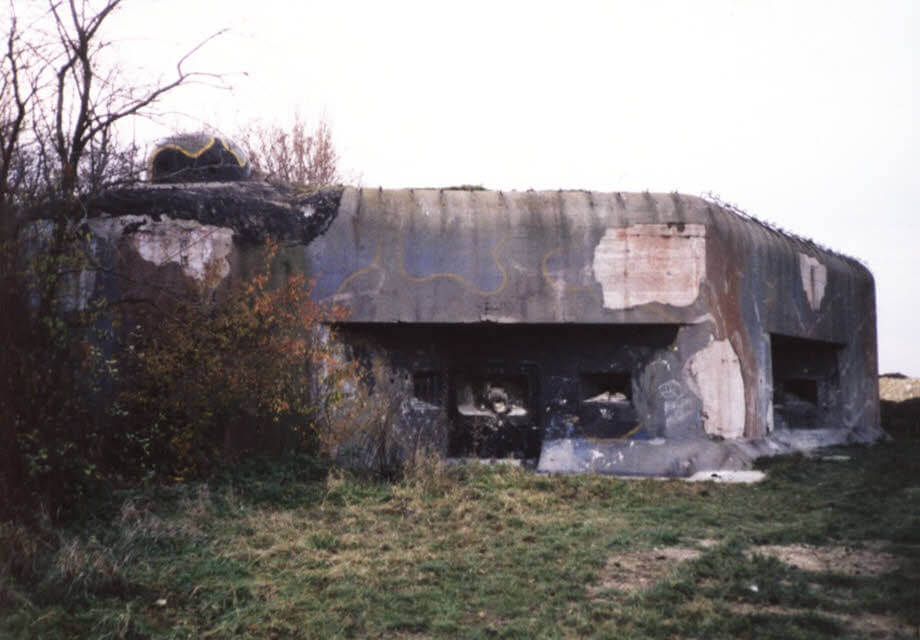

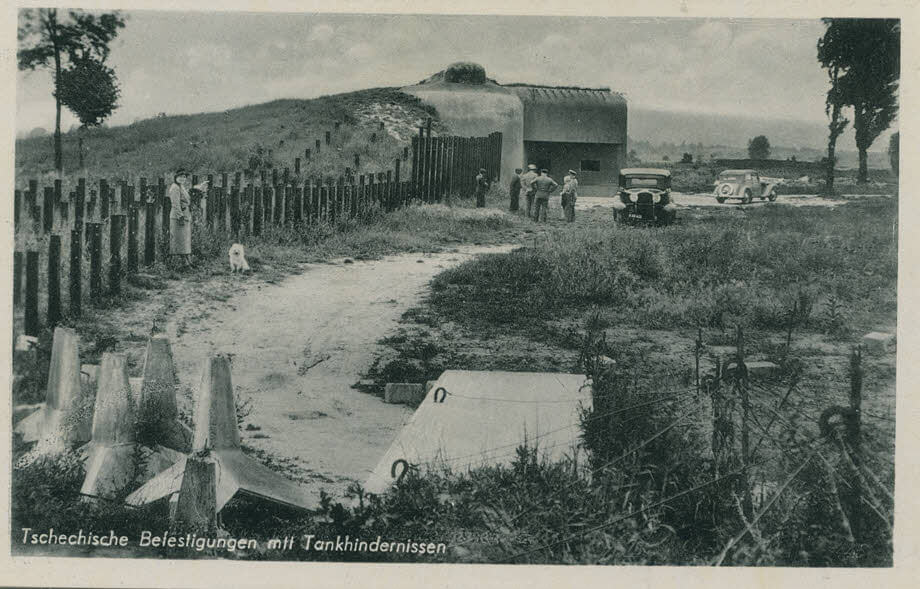
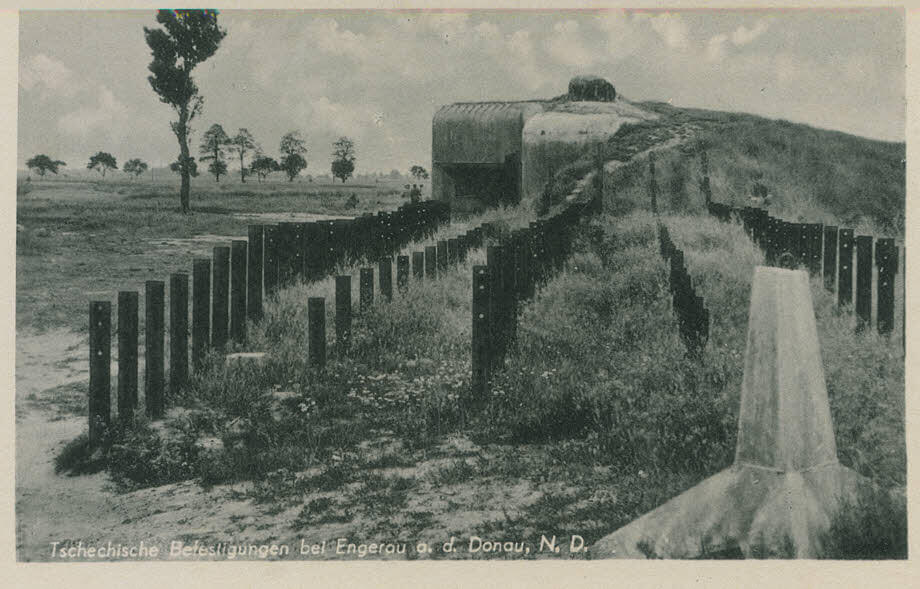

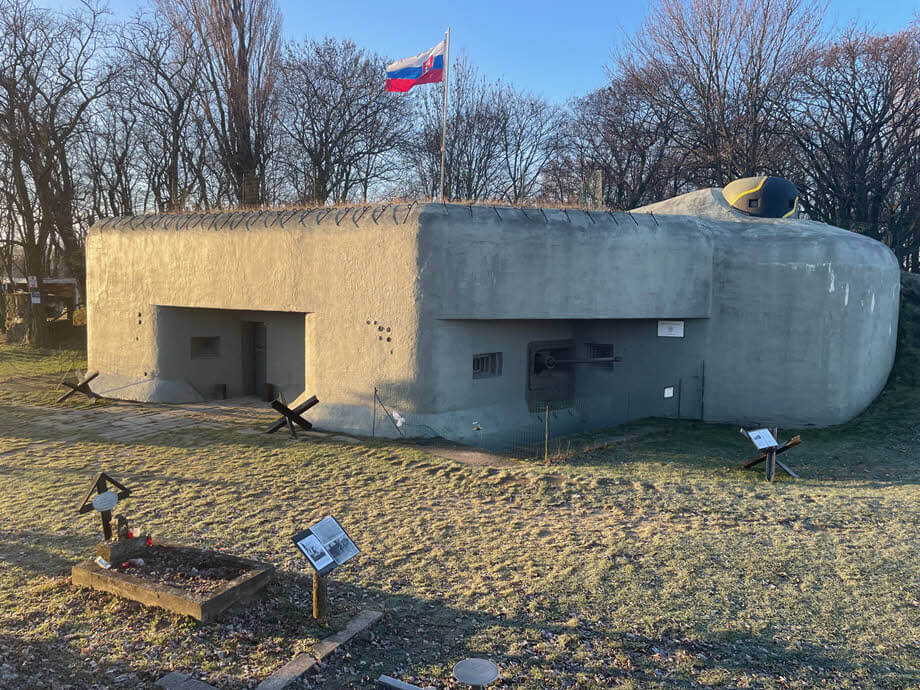
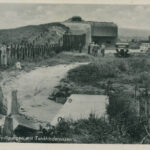
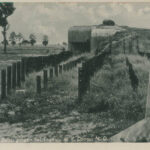
Bunker B-S 8 stands at the end of Kopčianska Street, by the First World War cemetery from which it took its cover name, “Cemetery”. It was located in the centre of the defensive line, and the surrounding area contains many military structures and other points of interest. Today, it houses a museum. Bunker B-S 8 was built in the second half of March 1937 as part of the Czechoslovak fortifications. It is an isolated infantry blockhouse, located in the centre of a fortified zone that originally consisted of 25 bunkers of various sizes. B-S 8, with the cover name “Cemetery”, had open fields on both sides, where enemy tanks and armoured vehicles could be deployed. To combat this, in addition to pairs of heavy machine guns, it also had anti-tank guns in both firing rooms, making it slightly larger than the other heavy structures in Petržalka. It is the only bunker in Petržalka with a two-flight staircase leading down to the underground floor. For reasons of economy, the other heavy structures had only a square hatch with a built-in ladder. The underground floor contained accommodation areas, stores for food, diesel, and ammunition, as well as a separate engine room and filtration room. On the upper floor, in addition to the firing rooms and further ammunition stores, there were rooms for the commander and telephone operator, as well as washing facilities. The washroom and WC in B-S 8 are located on the upper floor because of the high groundwater level, as in the other bunkers in Petržalka. The bunker’s accessible location has made it one of the better-known sites in Petržalka. Like bunker B-S 4, it was photographed relatively often by German soldiers during the Second World War, and several historical photographs of it have therefore survived. Since 2009, the bunker has been cared for by the civic association “Zachráňme petržalské bunkre” (“Saving the Petržalka Bunkers”). The association completely cleaned the bunker and established a wide-ranging military museum there. It stands at the end of Kopčianska Street, near the First World War cemetery, and a cycle route leads to it.

Military bunkers

Bunker B-S 8 Hřbitov (“Cemetery”)
-

-
-
-

-
-
-
