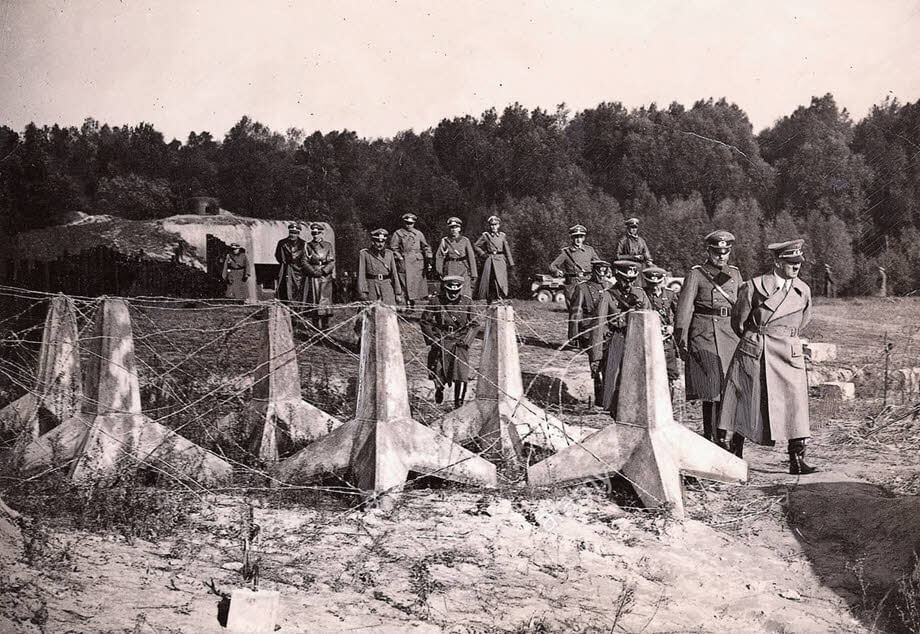
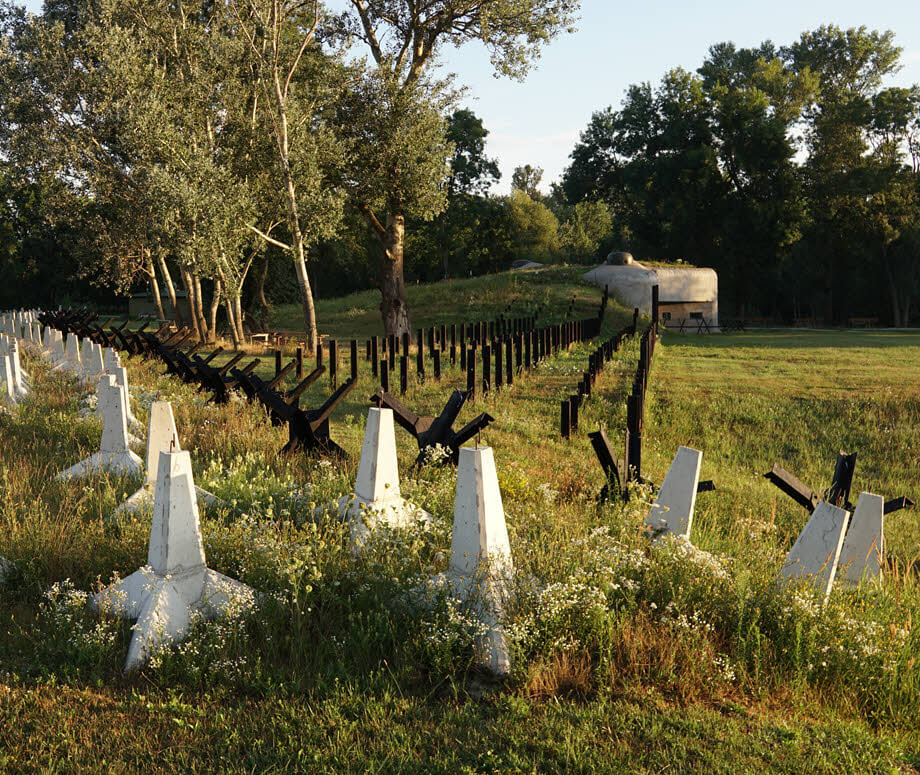
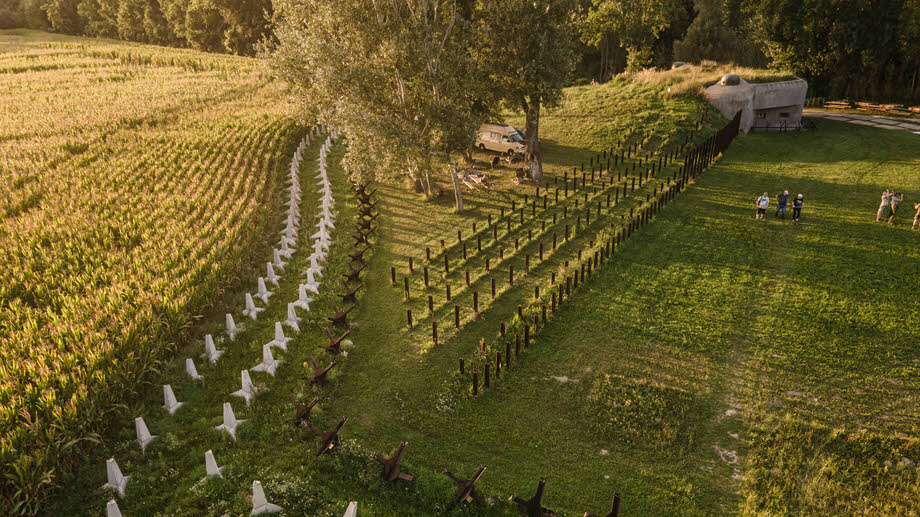
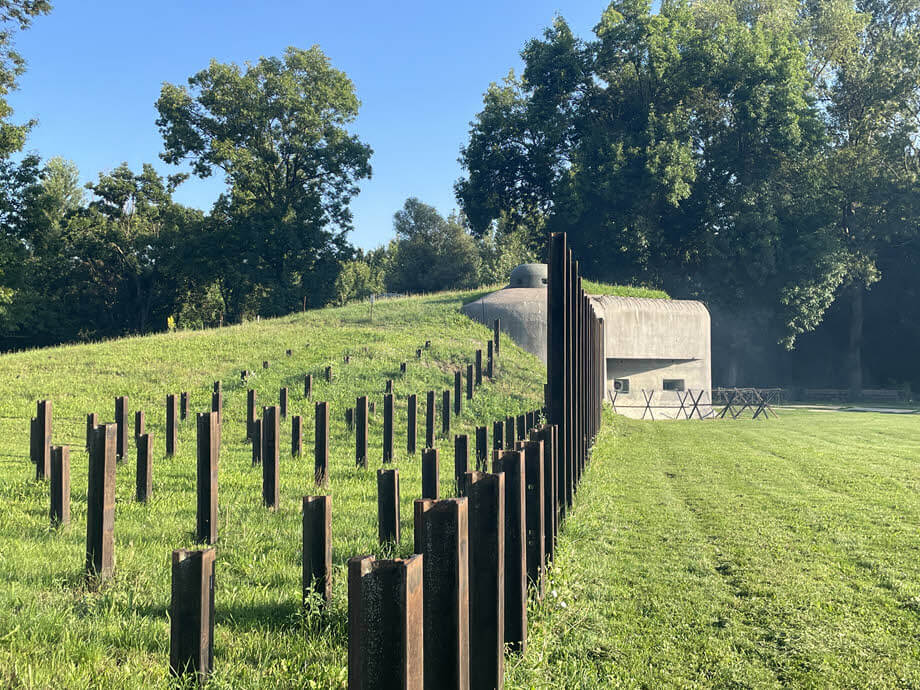
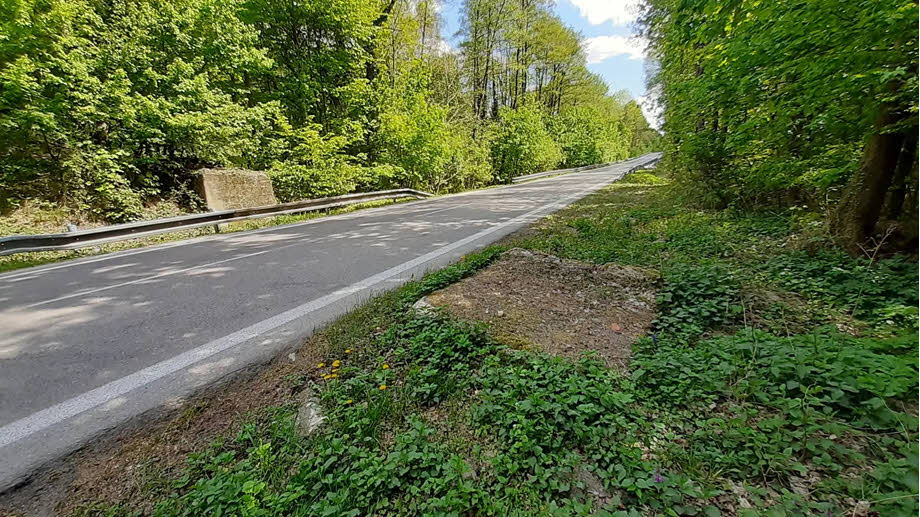
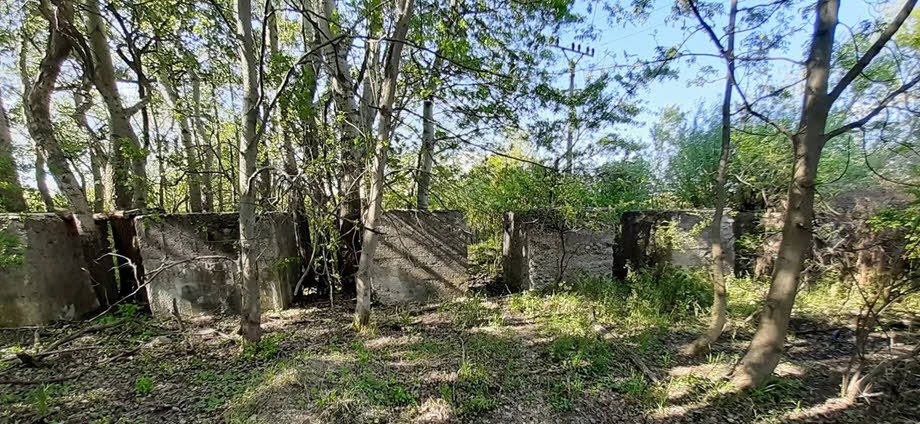
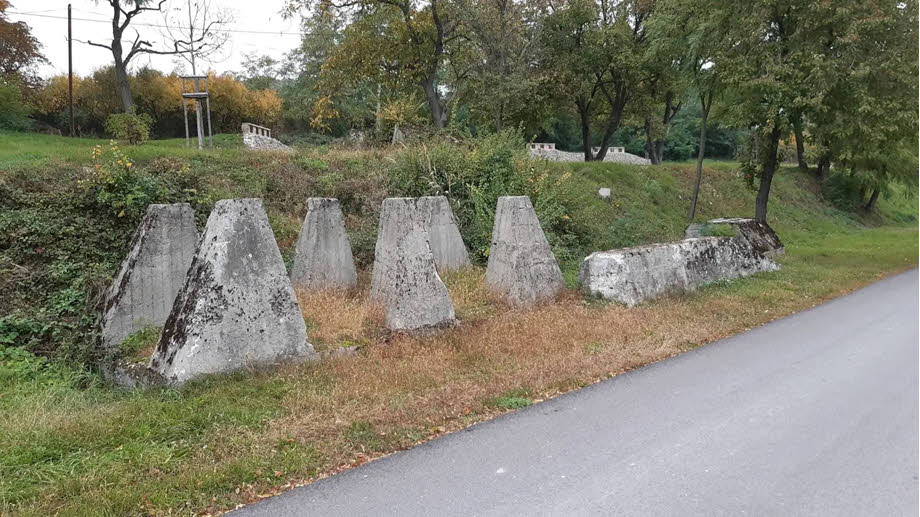
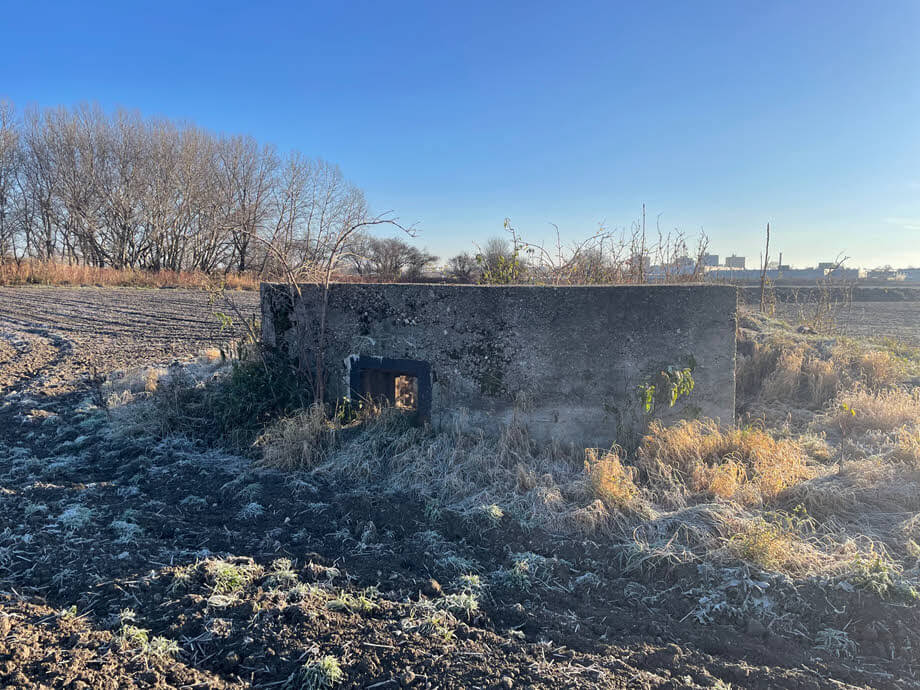
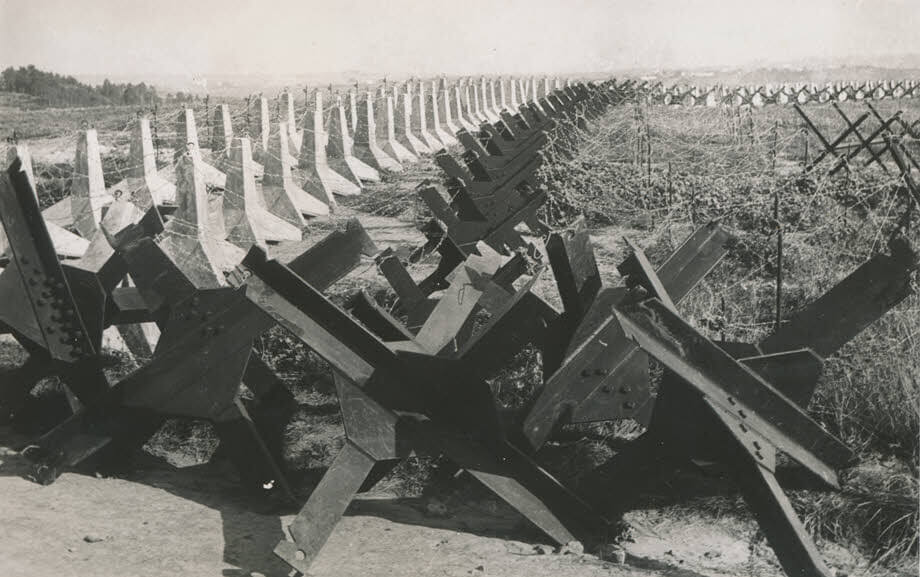
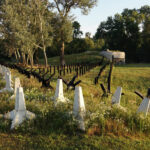
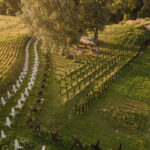
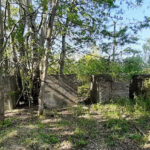
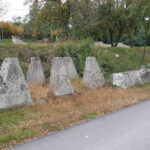
These were an essential part of the fortifications, protecting the area around the bunkers and slowing the enemy’s advance through the spaces between them. They formed a sophisticated system of steel obstacle posts, reinforced-concrete hedgehogs, and steel chevaux-de-frise, all interwoven with an impassable tangle of barbed wire. They were used to create perimeter obstacles around the structures, or linear obstacles blocking the open space between neighbouring bunkers. Between the bunkers in the forest, these took the form of anti-infantry obstacles made of barbed wire, ingeniously woven through several rows of steel posts. At the edge of the forest, they were joined by anti-tank obstacles. Their purpose was to stop vehicles and tanks, which could attack across open terrain. The barbed wire was therefore supplemented with reinforced-concrete and iron “hedgehogs”, of which there were more than 8,000 in Petržalka as a whole. This obstacle was an astonishing 11 m wide, and in this form it ran across open terrain almost all the way around Petržalka. An interesting feature of the Bratislava section was the use of railway rails within the perimeter obstacles of some heavy structures: in Bratislava, these were bunkers B-S 4, B-S 8, and B-S 13. This additional barrier consisted of several rows of railway rails driven into the ground, a form rarely seen elsewhere in Czechoslovakia. Parts of the anti-tank and anti-infantry obstacles mentioned above have been reconstructed at bunker B-S 4, where they can be seen today in their original locations. The anti-tank ditch was also the setting for the well-known photograph of Adolf Hitler with bunker B-S 4 in the background, taken when he visited it on 25 October 1938.

Military bunkers

Anti-tank and anti-infantry obstacles
-
-
-
-
-

-
-
-
-